Splitting the Collection: How Divorce Proceedings Are Quietly Reshaping Britain's Contemporary Art Market
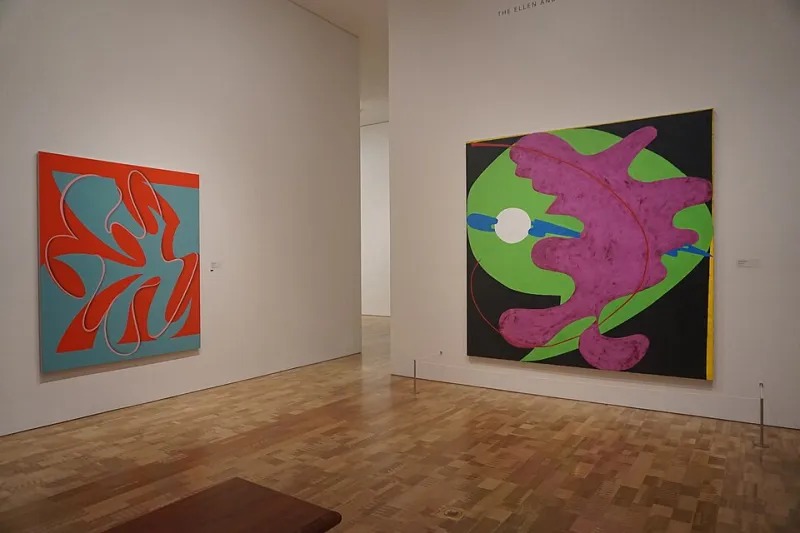
Photo: Michael Barera, CC BY-SA 4.0, via Wikimedia Commons
The Painting Above the Fireplace
It is an object that once represented shared taste, a mutual decision made on a Saturday afternoon at a regional art fair or a gallery private view. The painting above the fireplace, the ceramic on the hallway shelf, the limited-edition print in the spare room — these are among the most emotionally charged assets in any matrimonial estate. And as Britain's divorce rate generates tens of thousands of financial settlements each year, the contemporary art market is quietly absorbing the consequences.
The figures are not formally tracked. No industry body publishes data on the volume of contemporary British art that changes hands as a direct result of separation proceedings. But speak to family law solicitors, specialist art valuers, and the artists whose work features in these estates, and a clear picture emerges: the dissolution of marriages is generating a surprisingly active secondary market in original work, whilst simultaneously driving a wave of determined new purchasing by individuals establishing their post-separation identities.
What the Solicitors See
For family law practitioners, art presents a particular challenge within financial remedy proceedings. Unlike property or pension assets, original artwork carries no standardised valuation mechanism. A piece acquired for £800 at an open studio event in 2014 may have appreciated considerably — or may be worth less than its frame. Establishing fair value requires specialist input, and the process of obtaining it introduces both delay and expense into proceedings that are already emotionally fraught.
Solicitor Miranda Forsythe, a partner at a Leeds-based family law firm with a particular interest in high-net-worth separations, describes art as 'one of the most reliably contentious asset classes we encounter. It is not simply about money. Clients have strong emotional attachments to specific pieces, and those attachments do not always correlate with market value. We have seen disputes over a £600 watercolour that generated more correspondence than a six-figure investment portfolio.'
The resolution of these disputes typically follows one of three paths: one party retains the work and its value is offset against other assets; the work is sold and the proceeds divided; or, in some cases, the couple agrees to a private sale to a known buyer — occasionally the artist themselves, if the work qualifies for repurchase. Each outcome has market consequences.
The Valuation Moment
The instruction of a specialist art valuer is, for many clients, the first time their collection has been formally appraised. This process frequently produces surprises. Works acquired modestly, without any investment intention, are sometimes found to have appreciated substantially — particularly in cases where the artist has since achieved wider recognition or auction presence.
Nicola Chambers, a fine art valuer based in Bristol who works with solicitors across the South West and Wales, notes that the contemporary British sector has generated some of the most striking valuation uplifts she has encountered. 'We are seeing pieces by regional artists — painters, printmakers, ceramicists — that were bought for a few hundred pounds at craft fairs or studio sales, now valued at several thousand. The owners are often astonished. They bought the work because they liked it, not because they expected it to perform as an asset.'
This discovery transforms the nature of the settlement negotiation. Art that was treated as a domestic furnishing becomes a financial instrument. And the forced sale that sometimes follows — whether through auction or private treaty — introduces works into a market that was previously unaware of their existence.
The Secondary Market Consequence
When jointly owned contemporary works are sold as part of matrimonial proceedings, they typically enter the market through one of several routes: regional auction houses, specialist online platforms, or — increasingly — direct resale through the original gallery or artist's representative. Each route generates visibility for the artist's secondary market, sometimes to significant commercial effect.
Auction houses in particular have noted the pattern. A regional saleroom in the Midlands that handles a volume of matrimonial-related consignments each year reports that works by living British artists sold in this context regularly attract competitive bidding. 'There is something about the provenance of a private collection — even one being dissolved — that appeals to buyers,' observes one specialist. 'These are not works that were bought for resale. They were chosen because someone loved them. That history is legible in the object.'
For artists whose work appears in these sales, the outcomes are mixed but not uniformly unwelcome. A strong secondary market result establishes a price anchor that supports future primary sales. Several artists have reported that matrimonial auction appearances — over which they have no control — have led directly to new gallery enquiries or collector approaches.
The Purchase That Declares Independence
If the dissolution of a shared collection is one side of this market dynamic, the other is considerably more buoyant: the deliberate, identity-driven purchasing undertaken by newly separated individuals in the months and years following a split.
This is a phenomenon that gallery owners and art advisers across Britain describe with notable consistency. The recently divorced or separated buyer arrives with a clear psychological agenda: to inhabit their new space — whether a rented flat in Edinburgh or a purchased property in Surrey — with art that is entirely, unambiguously theirs. No negotiation, no compromise, no deference to a partner's preference. The purchase is an act of self-definition as much as aesthetic choice.
'We see this regularly,' says one London-based art adviser who works with private clients across the home counties. 'Someone comes to us six months after a separation, often for the first time, and they know exactly what they want — or rather, they know exactly what they don't want. They don't want what they had before. They want work that reflects who they are now. That clarity of purpose makes them excellent collectors.'
For contemporary British artists, this buyer represents a particularly valuable market segment. They are motivated, financially committed, and emotionally invested in the purchase. They are also, frequently, buying at a level they would not previously have considered — making a statement through the work's significance rather than its modesty.
A Market That Operates in Silence
The divorce dividend, as it might be termed, operates largely without acknowledgement. It carries none of the celebratory framing of a first home purchase or the institutional weight of a corporate commission. Yet its commercial significance for the contemporary British art market is real and, by most accounts, growing.
As property values — and by extension, the financial stakes of matrimonial proceedings — continue to rise, and as the generation that came of age buying original art at degree shows and regional fairs now moves through mid-life, the volume of contemporary work embedded in matrimonial estates will only increase. The market that emerges from those estates, both through forced sales and determined new purchases, deserves rather more attention than it currently receives.