Platform Discoveries: How Britain's Railway Stations Became Unlikely Launchpads for Contemporary Art Careers
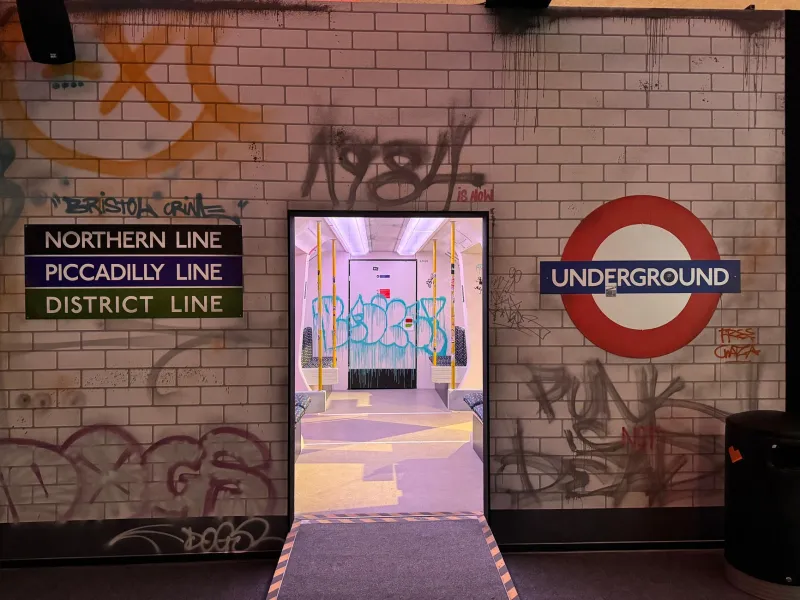
The morning commute is not, by reputation, a moment of aesthetic awakening. Packed platforms, delayed services, and the anxious arithmetic of connection times do not obviously lend themselves to the kind of unhurried contemplation that art is presumed to require. And yet something unexpected is happening in the concourses and underpasses of Britain's busiest railway stations — something that is reshaping both the careers of emerging artists and the assumptions of those who curate for them.
Over the past decade, a confluence of public art commissioning, corporate cultural investment, and transport authority ambition has transformed a number of the UK's major rail hubs into de facto galleries. The work on display ranges from large-scale digital projections to permanent sculptural installations, from rotating print exhibitions to site-specific textile commissions. What unites these diverse projects is their audience: not the self-selecting visitors who seek out a gallery, but the vast, involuntary public of the daily commute.
Art Without Appointment
The distinction matters enormously. Gallery visitors arrive with intent. They have made a decision — to go, to look, to engage. Commuters have made no such decision. They are present by necessity, and their attention is, at best, divided. The challenge for any artist exhibiting in a transport environment is to arrest that distracted gaze, to create a work compelling enough to compete with mobile screens and departure boards.
The artists who succeed in this environment frequently discover that the reward is disproportionate to the effort. Exposure at a major transport hub is, in terms of raw numbers, simply incomparable to anything the gallery circuit can offer. London Waterloo alone handles upwards of ninety million passenger journeys annually. Even a fraction of a fraction of that footfall represents an audience that most exhibition spaces could not accumulate across years of programming.
Lucy Armitage, a textile artist based in Sheffield whose woven panels were installed at Leeds railway station as part of a regional arts initiative, describes the aftermath with evident surprise. "I expected the commission to raise my profile locally," she says. "I did not expect to receive enquiries from London, from Edinburgh, from someone in Cornwall who had passed through Leeds on a holiday journey. The station gave my work a reach I simply could not have manufactured."
Of the seven enquiries Armitage received in the three months following the installation, four converted into sales. One led to a further commission. The arithmetic of accidental exposure, it transpires, can be remarkably favourable.
The Digital Dimension
The relationship between transport-based art and digital discovery has added a further layer of complexity — and opportunity — to this emerging dynamic. Commuters who pause before an installation increasingly reach for their phones, not to make calls, but to photograph, to search, to share. A striking work in a busy station can generate a social media afterlife entirely disproportionate to its physical context.
This phenomenon has been particularly pronounced for digital artists, whose work translates readily into shareable formats. Immersive digital projections, interactive light installations, and algorithmically generated visual sequences have all found a natural home in the large, architecturally dramatic spaces of Britain's Victorian terminal stations. The scale that such spaces demand happens to suit digital work well, and the audiences who encounter it are often already primed to engage through screens.
Artists working in digital media have been among the earliest and most vocal advocates for transport-based exhibition opportunities. For many, the commission model — in which a fee is paid for the installation rather than a percentage of sales — provides a financial stability that the gallery circuit rarely offers at the emerging stage of a career. The exposure, meanwhile, can be transformative.
Functional Space, Serious Art
Not everyone in the art world has welcomed the expansion of exhibition practice into transport environments. Critics of the trend argue that art requires conditions of attention — quietude, adequate lighting, freedom from distraction — that a busy railway concourse cannot provide. A work encountered between the coffee kiosk and the ticket barrier, this argument runs, is a work encountered poorly.
Practitioners working in the field tend to find this objection both overstated and philosophically revealing. Art has never required a white cube. The medieval craftsmen who carved the misericords in Britain's great cathedrals did not expect their audiences to stand still. The muralists of the Arts and Crafts movement understood that domestic and civic spaces could sustain serious visual ambition. The railway station, in this reading, is simply the latest in a long line of functional contexts that art has colonised productively.
Dr Philippa Crane, who researches public art commissioning at a northern university and has advised several transport authorities on arts programming, takes a measured position. "The question is not whether transport spaces are appropriate for art," she argues. "It is whether the art is appropriate for the space. Site-responsive work that engages with the particular conditions of a station — its movement, its scale, its emotional register — can be extraordinarily powerful. Generic work dropped into a functional context rarely succeeds."
Stations as Stepping Stones
For a growing number of British artists, a transport commission has served as a decisive step change — the moment at which their practice became commercially viable at a meaningful scale. The combination of guaranteed fee income, extensive public exposure, and the credibility that attaches to a major institutional commission creates conditions that the independent gallery circuit struggles to replicate.
Several artists who have benefited from this pathway describe a similar sequence of events: the commission arrives at a moment of financial uncertainty; the installation generates unexpected public interest; that interest translates into gallery enquiries; the gallery relationships, in turn, produce sustained sales. The station, in this account, is not the destination but the mechanism — the place where an artist's work meets an audience large enough to contain, somewhere within it, the collectors who will sustain a career.
Ben Fairweather, a painter from Newcastle whose large-format canvases were displayed at King's Cross as part of a temporary cultural programme, describes the experience as a professional watershed. "Before the station, I had a modest following and modest sales," he says. "Afterwards, I had a waiting list. The work hadn't changed. The audience had."
Britain's railway network, with its extraordinary daily reach and its growing appetite for cultural programming, represents one of the most significant — and most underappreciated — platforms for contemporary art in the country. For artists willing to engage with its particular demands, the rewards can be considerable. For collectors alert to where the next significant careers are being made, the platform, it turns out, is worth watching.