Heritage Halls and New Horizons: How Britain's Historic Properties Are Minting a New Generation of Art Buyers
A Familiar Threshold, An Unfamiliar Purchase
There is something disarming about encountering a vivid oil painting by a living Derbyshire artist hanging in the corridor of a seventeenth-century manor house. The surroundings are trustworthy, the institution familiar, and the experience of looking at art already sanctioned by centuries of cultural habit. For a great many British visitors, this is precisely the moment that separates passive admiration from active collecting.
National Trust and English Heritage properties welcomed a combined figure of tens of millions of visitors last year. The overwhelming majority arrived to walk the grounds, admire the plasterwork, and take tea in the café. A growing number, however, left with something rather more portable: the beginnings of a collection.
The Strategic Placement of Living Work
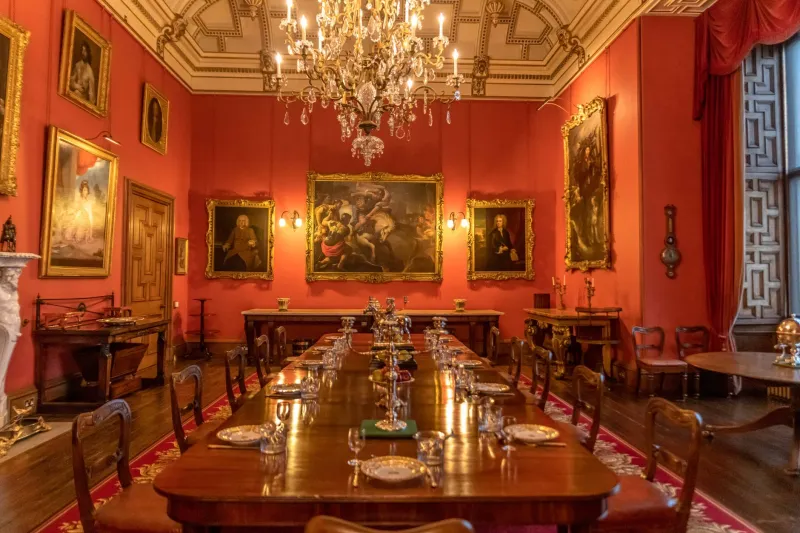
Several National Trust properties have, over the past decade, developed formal programmes that situate contemporary commissions within their historic interiors. Kedleston Hall in Derbyshire, Lacock Abbey in Wiltshire, and Sutton Hoo in Suffolk have each hosted artist residencies or temporary exhibitions that place original works in direct conversation with the historic fabric of the buildings.
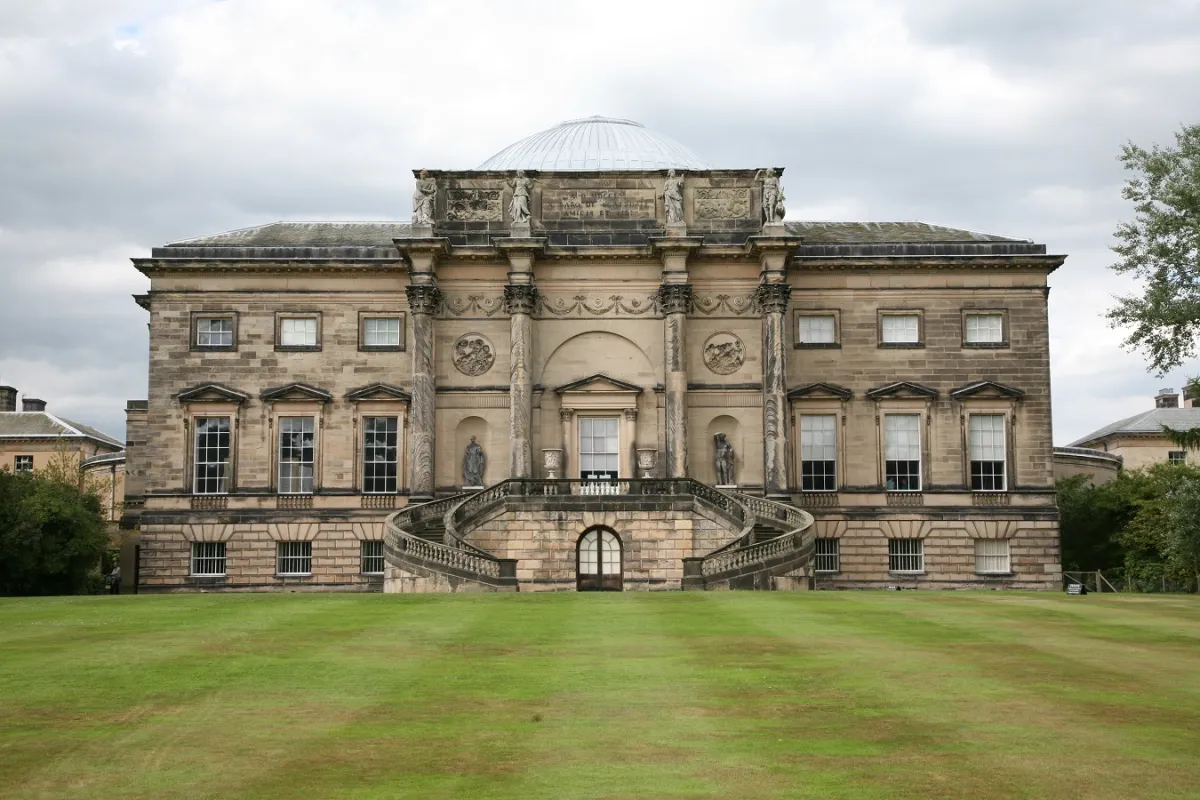 Photo: Kedleston Hall, via blogger.googleusercontent.com
The logic is not purely aesthetic. Property managers and regional curators are increasingly aware that contemporary art placements generate renewed press attention, attract younger visitor demographics, and — critically — create commercial opportunities for the artists involved. Many Trust properties now operate small sales points, either adjacent to their exhibitions or through curated online shops, where visitors may acquire prints or original works by featured artists.
For artists, the benefits extend well beyond a single sale. Sculptor and printmaker Rachel Mourne, whose work was placed at a National Trust property in the Lake District as part of a regional artist programme, describes the experience as 'entirely unlike any gallery show I had done previously. The visitors were not self-selecting art buyers. They were families, walkers, retired couples — people who had never considered buying original work. But because they encountered it in a place they already loved and trusted, the conversation was different from the start.'
Mourne sold eleven pieces during the placement period and received private commission enquiries from three separate collectors — none of whom had previously purchased original art.
The Psychology of the Heritage Setting
Commercial galleries, however welcoming their staff, carry an implicit social weight for the uninitiated. The white-walled space, the absence of price tags in the window, the assumption of prior knowledge — these are well-documented barriers to first-time buyers. Historic properties dissolve many of these anxieties almost entirely.
Visitors arrive already engaged in an act of cultural participation. They are paying for an experience, moving through rooms, reading interpretive text, and forming emotional responses to objects. When a contemporary painting or ceramic appears within that sequence, it enters a context of meaning-making rather than commercial transaction. The psychological distance between 'admiring something' and 'acquiring something' contracts considerably.
Dr. Susan Hale, a lecturer in cultural economics at the University of Leeds who has studied visitor behaviour at heritage sites, notes that 'the heritage environment confers a kind of implicit endorsement on whatever is displayed within it. If the National Trust has chosen to exhibit this artist's work alongside a Gainsborough, the visitor's instinct is to treat it with corresponding seriousness. That matters enormously for first-time buyers who are uncertain of their own taste.'
English Heritage and the Commission Model
English Heritage has pursued a parallel but distinct approach, focusing in several instances on site-specific commissions that respond directly to the history of individual properties. At Osborne House on the Isle of Wight and at Belsay Hall in Northumberland, artists have been invited to create work that interprets the site's architectural or social history, with the resulting pieces displayed in situ for extended periods.
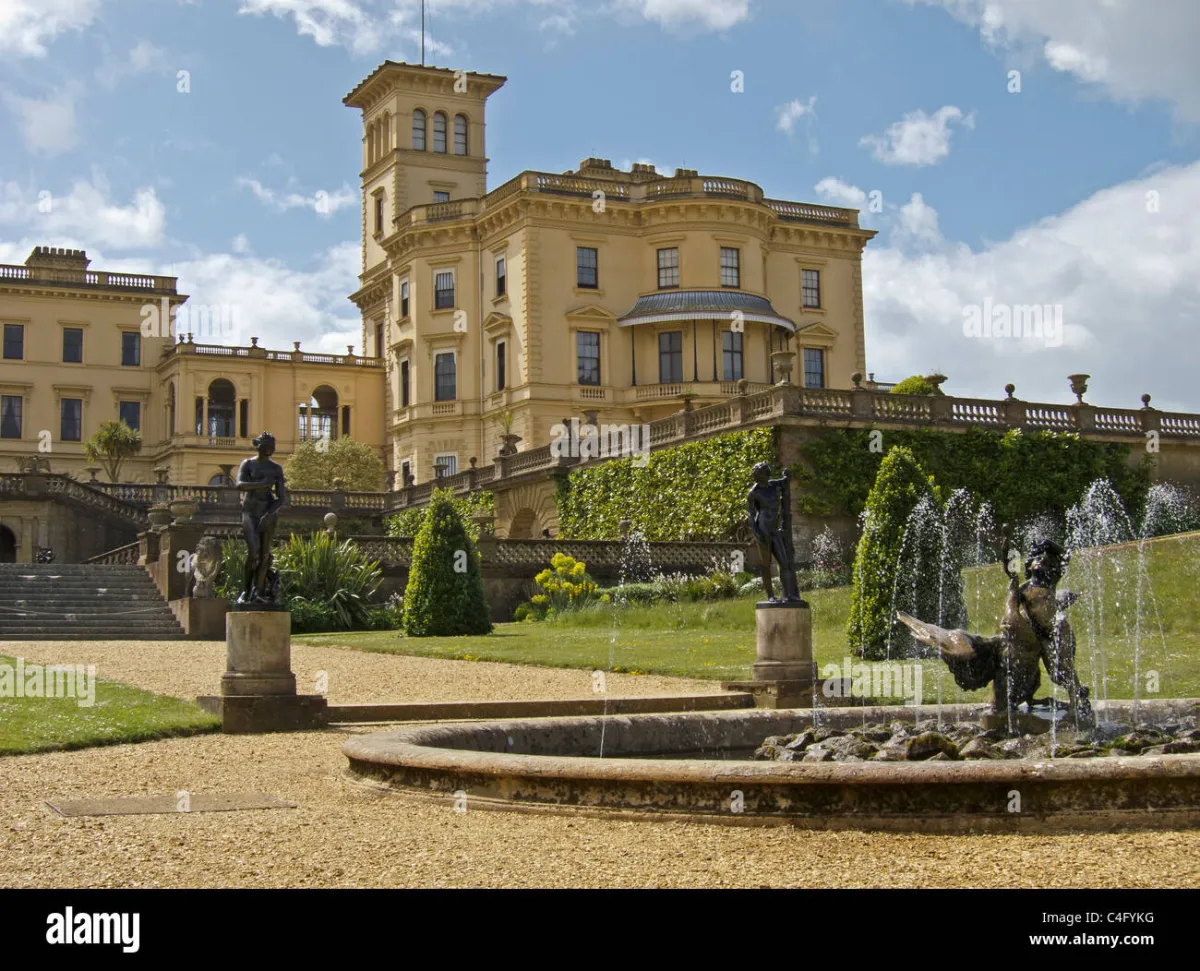 Photo: Osborne House, via c8.alamy.com
This commission model carries particular commercial weight. Works created specifically for a location carry a provenance narrative that resonates with buyers. Collectors who visit a property, encounter a site-specific piece, and learn the story of its creation are purchasing not merely an object but a documented relationship between an artist and a place of national significance. For the secondary market, this is a compelling proposition.
Northumberland-based painter James Alderton, who completed a commission for a fortified tower on the English Heritage estate at Aydon Castle, reports that the resulting body of work — exhibited on site before being offered for private sale — attracted buyers from as far as Edinburgh and Bristol. 'People had seen the work in context,' he says. 'They understood what it was responding to. That understanding made them more confident as buyers.'
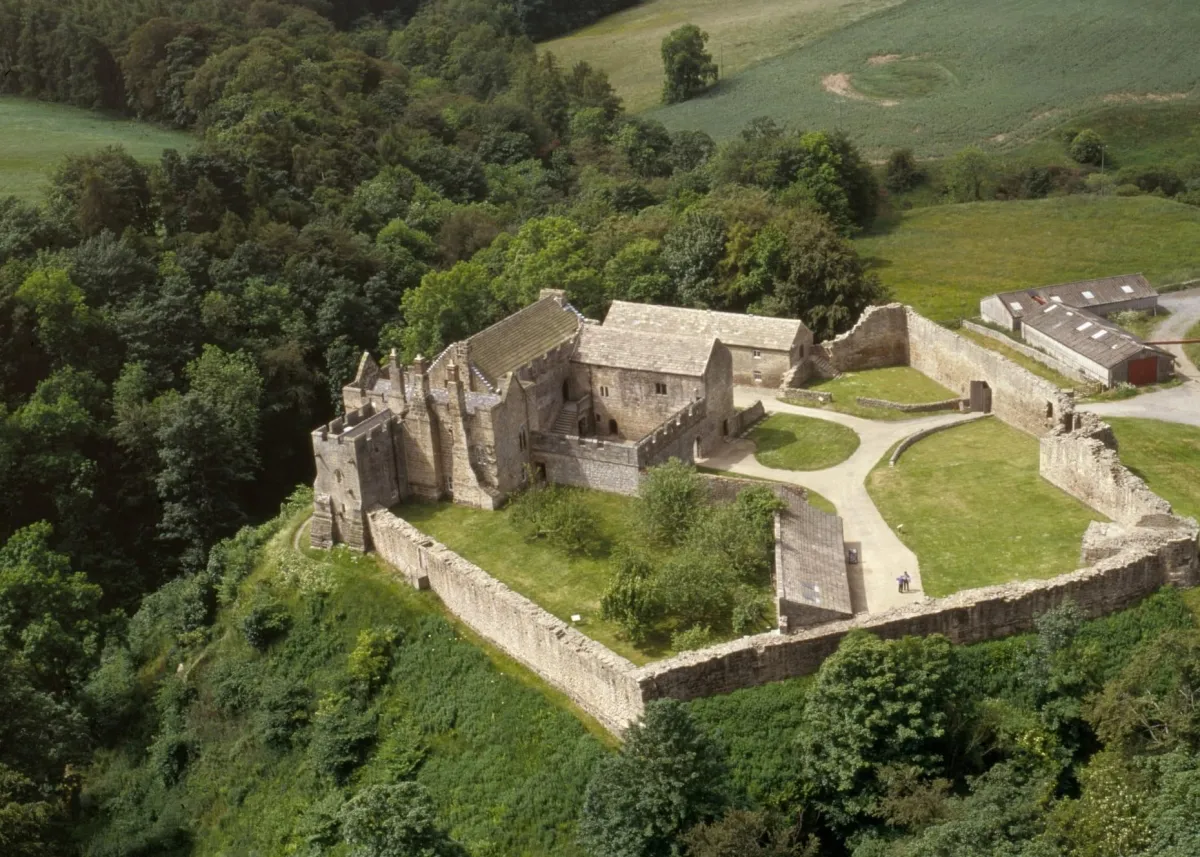 Photo: Aydon Castle, via wheretogowithkids.co.uk
The Shop at the End of the Tour
Perhaps the most commercially immediate manifestation of this trend is the evolution of the heritage property gift shop. Where once these spaces were dominated by guidebooks, fudge, and reproduction prints of Old Masters, a number of Trust and English Heritage properties now dedicate meaningful retail space to original works and limited editions by contemporary British artists.
The positioning is deliberate. Visitors exit the property through the shop — a retail convention that heritage organisations share with museums and galleries worldwide. But the emotional state of the departing heritage visitor is notably receptive. They have spent several hours in a state of heightened aesthetic engagement. A well-curated display of original ceramics, limited-edition prints, or small paintings by a regional artist, priced accessibly and accompanied by clear biographical information, presents itself not as a luxury indulgence but as a natural extension of the experience.
Several artists represented through Gallery Top have reported that heritage property retail partnerships represent their most consistent source of new collectors — buyers who subsequently seek out further work online or attend open studio events having made their initial purchase in a tea room annexe in Shropshire or a converted stable block in Kent.
A Pipeline Worth Cultivating
For Britain's contemporary art ecosystem, the heritage sector represents something genuinely valuable: a mechanism for introducing original art ownership to audiences who have, to this point, remained outside the collecting conversation. These are not fringe visitors. They are the millions of British families who regard a National Trust membership as an entirely normal cultural expenditure, who walk through rooms of historic furniture with genuine interest, and who — given the right encounter at the right moment — are entirely capable of becoming serious collectors.
The properties themselves are beginning to recognise this potential more consciously. Artist placement programmes that once operated on an ad hoc basis are increasingly formalised, with dedicated curatorial roles, regional artist rosters, and structured commercial arrangements. For artists willing to engage with the particular demands of the heritage context — sensitivity to setting, clarity of communication, patience with a non-gallery audience — the returns, both financial and reputational, are considerable.
Britain's historic houses have always been repositories of taste. It is fitting, perhaps, that they are beginning to shape it anew.