Blueprint for Beauty: How British Architects Are Building Art Into the Fabric of New Homes
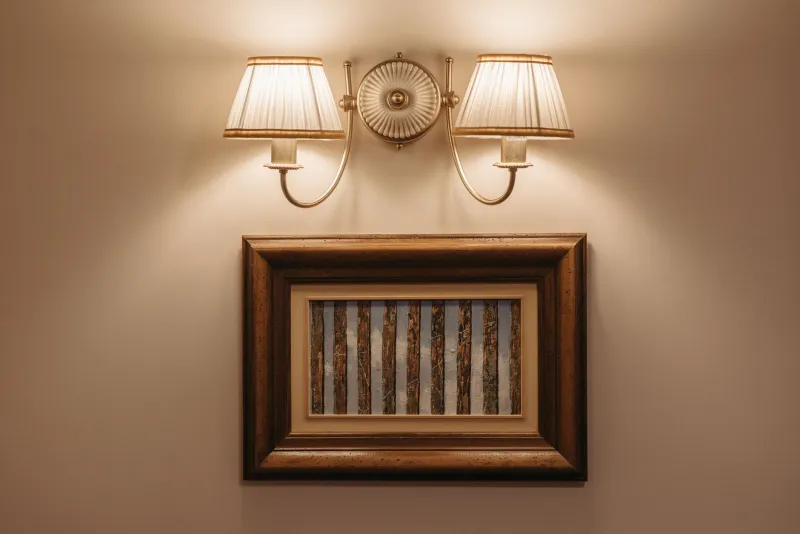
For decades, the sequence was predictable. A family would commission an architect, endure months of planning permissions and structural decisions, move into their finished home, and only then — once the carpets were laid and the curtains hung — turn their attention to the walls. Art arrived last, chosen hastily, often from a high-street print retailer, sized to fit whatever space remained.
That sequence is now being reversed.
Across Britain, a meaningful shift is under way in residential architecture and high-end renovation. Architects, interior designers, and their clients are bringing conversations about original art into the earliest stages of a build — not as an aesthetic flourish, but as a structural and budgetary consideration that shapes the very bones of a property.
Designing for the Collection
The change is visible in the language architects are using. Phrases such as "feature hanging wall," "gallery corridor," and "picture light circuit" are appearing in initial briefs with increasing regularity. Edinburgh-based architect Fiona Carmichael, whose practice specialises in contemporary residential conversions across Scotland, describes a marked change in client expectations over the past five years.
 Photo: Fiona Carmichael, via images.squarespace-cdn.com
"We used to discuss art at the point of interior specification — essentially, at the end," she explains. "Now clients are arriving at the first consultation with images of work they already own or intend to purchase. They want us to design rooms around those pieces. The wall becomes as important as the window."
This approach has practical implications. Recessed picture lighting requires electrical planning at the first-fix stage. Feature walls benefit from structural reinforcement if large, heavy canvases are intended. Ceiling heights, natural light angles, and even floor finishes are all reconsidered when a collection is part of the brief from the outset.
A New Kind of Collector
What is driving this shift? Several forces appear to be converging. The sustained growth of Britain's contemporary art market has raised awareness of original work as a viable acquisition rather than an aspirational luxury. Increased exposure to art — through social media, regional art fairs, and platforms dedicated to connecting buyers with emerging British artists — has lowered the perceived barrier to collecting.
Crucially, the homeowners commissioning these art-integrated builds are often acquiring property later in life, with greater financial confidence and a clearer sense of what they value. They are not decorating a starter home; they are designing what they intend to be a long-term environment, and they are approaching it with corresponding seriousness.
David Hartley, a Cheshire-based developer who recently completed a self-build project near Macclesfield, describes art budgeting as a natural extension of his approach to the broader build. "I spent months selecting the right stone for the external cladding. It seemed absurd to then walk into a chain retailer and pick prints off a shelf for the interior. I worked with an artist from the very beginning — she visited the site before the roof was on."
The artist in question, Yorkshire painter Rachel Sims, recalls the commission as unlike anything she had previously experienced. "David sent me the architectural drawings. I was responding to rooms that didn't yet exist — to light that hadn't been captured, to spaces that were still theoretical. It was extraordinary, and the resulting work was far more resolved than anything I might have produced for a finished room."
 Photo: Rachel Sims, via i.pinimg.com
The Commercial Architecture of Art
For British artists, this trend represents a genuinely new commercial pipeline. Commissions that emerge from architectural briefs tend to be larger in scale, longer in duration, and higher in value than equivalent gallery sales. They also generate a different quality of relationship between artist and collector — one rooted in collaboration rather than transaction.
London-based architect James Okafor, whose practice has completed several art-integrated residential projects in the home counties, notes that the commissions he facilitates benefit both parties in ways that extend beyond the financial. "The artist gains insight into how their work will actually live in a space. The client gains a piece that was conceived specifically for their home. There is an intimacy to that which no gallery purchase can replicate."
 Photo: James Okafor, via neusroom.com
Okafor has begun maintaining a shortlist of British artists he considers when a client's brief indicates a strong appetite for original work. "It is not a formal arrangement, but it functions like one. I know whose practice aligns with which aesthetic sensibility. I make introductions, and those introductions frequently lead to commissions."
Lighting as a Discipline
One of the most tangible expressions of this architectural approach to art is the renewed attention being paid to picture lighting. Specialist lighting designers, once employed almost exclusively in commercial gallery fit-outs, are now being engaged on residential projects with significant art collections.
The technology has advanced considerably. Adjustable-colour-temperature LED systems allow homeowners to shift from a warm domestic atmosphere to a cooler, more gallery-like rendering depending on the occasion. Track systems installed at ceiling level offer flexibility as collections evolve. Recessed spotlights, positioned during construction to illuminate specific hanging points, eliminate the improvised clip-on solutions that once characterised domestic art display.
"Lighting transforms work," says Carmichael simply. "A painting that appears flat under domestic bulbs can become extraordinary under the right directional light. When architects take art seriously, they take lighting seriously. The two are inseparable."
Building a Legacy
There is, finally, something worth noting about the long-term implications of this trend for British art. Homes designed with art at their core do not simply consume art — they preserve and amplify it. Collections built through considered architectural commissions tend to be maintained, insured, and ultimately passed on. They become part of a property's identity and, in some cases, part of its value.
For emerging British artists, the prospect of their work forming part of a considered architectural scheme — displayed under calibrated lighting, in a space designed to honour it — represents a form of recognition that transcends the sale price alone.
The wall, it turns out, was always the beginning.