Healing Walls: The Quiet Revolution Turning Britain's Medical Spaces Into Art Market Frontiers
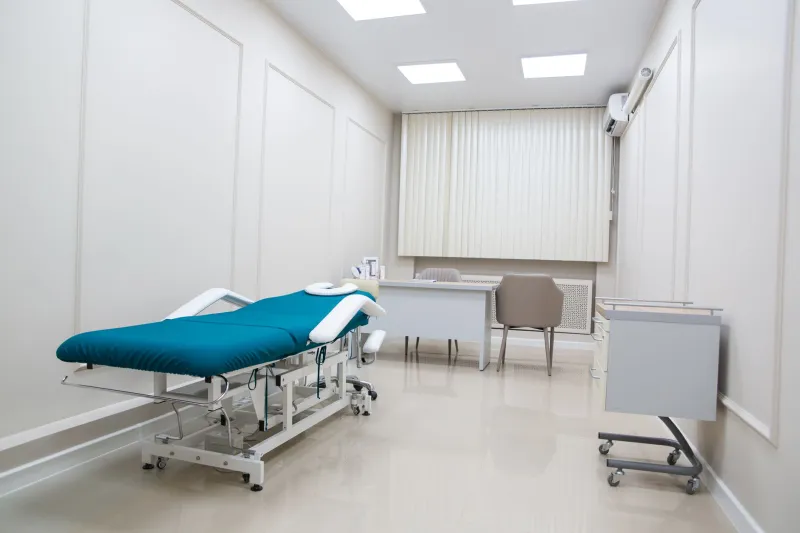
The waiting room has never been a comfortable place. Time moves differently there—stretched, uncertain, charged with a particular kind of apprehension that no amount of tasteful upholstery or ambient music has ever quite dispelled. It is, perhaps, the last environment one would expect to become a significant node in Britain's contemporary art market. And yet, in surgeries and clinics from Aberdeen to Truro, that is precisely what is happening.
A growing number of healthcare providers—spanning NHS primary care networks, private GP practices, dental clinics, physiotherapy centres, and specialist consultancy suites—are commissioning and displaying original contemporary British art, not as decoration but as considered institutional investment. The motivations are multiple, the effects are measurable, and the consequences for artists and collectors alike are only beginning to be understood.
The Evidence Behind the Aesthetic
The relationship between art and healing is not new. Hospitals have incorporated art programmes since at least the 1980s, and organisations such as Arts in Health have long advocated for the integration of creative work into clinical environments. What is newer is the shift from institutional commissioning of large, site-specific hospital works towards a more granular, commercially oriented model operating at the level of the individual practice.
The evidence base supporting this shift is robust and growing. Studies published in peer-reviewed medical journals have consistently demonstrated that exposure to visual art in clinical settings reduces patient anxiety, lowers perceived waiting times, and can meaningfully affect pain tolerance. For practice managers and clinic directors navigating an era of heightened patient expectation, the investment in original art is increasingly defensible on clinical as well as aesthetic grounds.
This evidence has not gone unnoticed by artists and their representatives. Where once a surgery might have hung a reproduction of a Monet watercolour or a photographic landscape, the same wall is now, in more and more instances, displaying an original canvas by a British painter—with a discreet price card and the name of a gallery through which enquiries may be directed.
The Medical Professional as Collector
The demographic profile of those working within private healthcare is, from an art market perspective, an attractive one. GPs, dentists, consultants, and specialists tend to combine professional success with cultural curiosity, time spent in environments where art is present, and an intellectual disposition that extends naturally towards aesthetic engagement. Many are already collectors; others are collectors who do not yet know it.
The surgery or clinic, as a collecting environment, offers something that a gallery cannot easily replicate: sustained, repeated exposure to a single work over weeks or months. A painting that hangs in a consulting room is seen by its owner every working day. It is studied, discussed with patients, and gradually internalised in a way that transforms the relationship between collector and artwork. Several artists who have placed work through medical channels report that the eventual purchase, when it comes, is made with unusual conviction—the result of an extended acquaintance rather than an impulse.
For patients, the dynamic is different but no less commercially significant. Artwork encountered in a clinical setting carries an implicit endorsement from a trusted professional. If the consultant has chosen to hang a particular painting in their rooms, it acquires a kind of cultural authority that advertising cannot manufacture. Patients who admire a work during an appointment and subsequently seek out the artist are a meaningful—if rarely quantified—source of new collectors.
Private Clinics and the Portfolio Dimension
Beyond the individual practice, the private healthcare sector presents a more explicitly investment-oriented dimension. Corporate clinic groups, private hospital operators, and wellness centre chains are beginning to approach art procurement with the rigour more commonly associated with financial asset management. Rotating collections, professionally curated and periodically refreshed, allow these institutions to maintain environments that feel current and engaged while building portfolios whose value appreciates over time.
This approach requires a different kind of partnership than a simple commission. Artists entering into arrangements with corporate healthcare clients must navigate considerations of scale, durability, and the sometimes competing aesthetic preferences of multiple institutional stakeholders. The commercial terms can be more complex than a straightforward gallery sale, but the exposure—to high-net-worth patients, to influential professionals, and to the wider networks that private healthcare serves—can be transformative for an emerging artist's career.
Curation as Clinical Practice
The selection of art for medical environments demands a particular sensitivity. Subject matter that might thrill in a contemporary gallery context—figurative work of high intensity, abstraction that challenges and unsettles—may be inappropriate for a space where patients are already managing anxiety. Curators working in this field speak of a distinct set of criteria: work that rewards sustained looking without demanding it, that suggests calm without condescending to it, and that maintains sufficient artistic ambition to interest the professionals who inhabit these spaces daily.
Landscape painting, in its contemporary British manifestations, has proved particularly well suited to clinical contexts. So too have certain strands of textile art, botanical illustration, and the quieter registers of abstract painting. Artists whose practice engages with natural light, seasonal change, or the textures of the British countryside find a ready audience in spaces where patients are seeking, consciously or otherwise, a point of psychological refuge.
An Audience Ready to Be Found
What makes the medical context genuinely novel as an art market channel is not simply its scale—though the number of clinical spaces across Britain is considerable—but its emotional register. People who encounter art in a waiting room are not in a neutral state. They are attentive, inward-looking, and frequently disposed towards reflection on what matters to them. These are precisely the conditions under which art makes its deepest impressions.
For British artists willing to engage thoughtfully with this environment, and for galleries capable of facilitating the necessary partnerships, the surgery wall represents something more than an additional sales channel. It represents access to an audience that is ready, in every sense, to be moved.