Light, Space, and Living Art: How Britain's Garden Room Boom Is Redefining the Domestic Commission
The statistics are striking. Planning applications for garden rooms and domestic extensions in England alone exceeded 100,000 in a recent twelve-month period, with specialist builders reporting waiting lists of six months or more. The garden room — once the preserve of the affluent — has become a mainstream aspiration, driven by shifting working patterns, a renewed appreciation for domestic space, and a construction industry that has responded to demand with products at increasingly accessible price points.
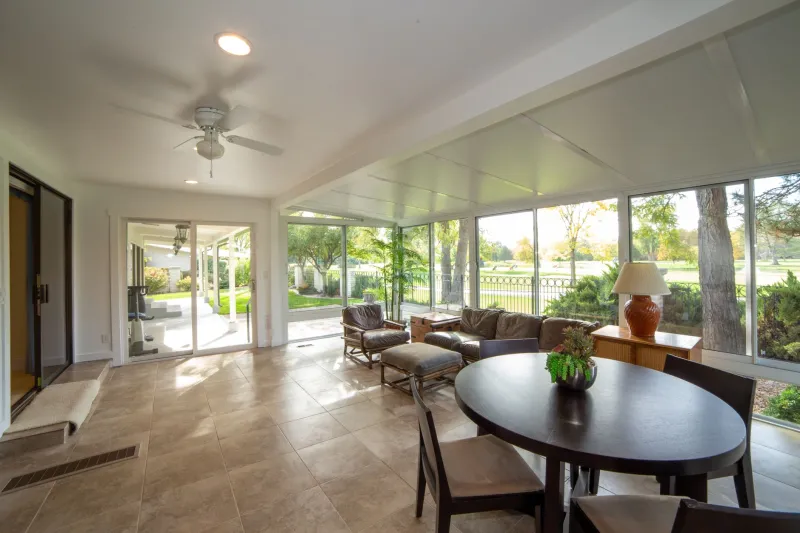
What is less frequently discussed is the cultural consequence of this architectural moment. Across Britain, newly completed garden rooms are presenting their owners with a particular and pleasurable problem: how does one furnish a space that is architecturally distinctive, flooded with natural light, and structurally quite different from the rooms it adjoins?
The answer, for a growing number of homeowners, is original art. Not art selected from a generic catalogue or purchased hastily from a high street print retailer, but work commissioned specifically for the dimensions, atmosphere, and orientation of the new space.
Architecture as Brief
The relationship between architecture and art is, of course, ancient. What is novel in the current moment is its domestic scale and democratic reach. Site-specific commissions were once the exclusive domain of public institutions, corporate headquarters, and the grandest private residences. The garden room is changing that calculus entirely.
"These spaces have a quality that is genuinely different from the interior of a Victorian terrace or a 1970s semi," explains one architect working across the South East who has incorporated art consultation into her practice. "The light is different — often more even, more consistent throughout the day. The proportions are different. The relationship to the garden is different. A work that would look perfectly appropriate in a conventional sitting room can feel entirely wrong in a garden room, and vice versa."
This architectural specificity has created a new category of brief for British artists: the garden room commission. Works are conceived with knowledge of the precise dimensions of the wall, the quality and direction of light at different times of year, the materials used in construction, and the view through the glazing that will inevitably form the dominant visual element of the space.
Artists Responding to the Opportunity
For contemporary British artists, particularly those working at scales that have historically been challenging to place domestically, the garden room commission represents a significant opportunity. Larger canvases, sculptural installations, and works in unconventional media — ceramics, textile, cast glass — find a natural home in spaces that were designed with a degree of architectural ambition.
Sophie, a painter based in rural Herefordshire whose large-scale botanical works have attracted considerable attention in recent years, reports that enquiries specifically related to garden rooms now constitute a meaningful proportion of her commission work. "The scale feels right," she explains. "People building garden rooms have often thought carefully about proportion and light. They understand why a large work makes sense in a space like that. They are not intimidated by ambition."
The commission process for garden room works tends to be more collaborative than conventional purchases. Homeowners share architectural drawings, photographs of the completed structure at different times of day, and detailed descriptions of how the space will be used. Artists visit sites where possible. The resulting works are genuinely responsive — shaped by the specific conditions of a specific place — in ways that distinguish them from studio works selected after completion.
The Emerging Market for Scale-Specific Work
Gallery professionals are beginning to recognise the garden room commission as a distinct market category with its own characteristics and requirements. Scale is the most obvious variable, but it is not the only one. Durability and environmental resilience matter in spaces that experience greater temperature fluctuation than conventional rooms. The relationship between internal work and external view demands consideration. Works that incorporate natural materials — wood, stone, pressed botanical elements — often perform particularly well in spaces that occupy a threshold between interior and garden.
One gallery director in Cambridge who has begun facilitating garden room commissions describes the typical client as "architecturally literate and aesthetically confident, but not necessarily experienced in working with living artists." The gallery's role, she suggests, is partly curatorial and partly translational: helping homeowners articulate what they want from a space, and helping artists understand the specific conditions they are working with.
"It is a genuinely exciting brief to facilitate," she adds. "There is none of the anxiety about whether something will fit or suit. The work is made for the space. It belongs there from the moment it is installed."
Digital Tools and the Commission Conversation
Technology has played a meaningful role in enabling this emerging market. Digital visualisation tools allow artists and homeowners to preview works in situ before a single mark is made. Augmented reality applications — several of which are now integrated into gallery platforms — enable clients to see proposed works at scale within photographs of their actual spaces. The result is a commission conversation that is more concrete and less anxiety-inducing than it might otherwise be.
For artists, these tools have reduced the risk of misaligned expectations that has historically made domestic commissions challenging. For homeowners, they provide the confidence to commit to works at scales and prices that might previously have felt uncertain.
A New Chapter in British Domestic Collecting
The garden room boom shows no sign of abating. As these spaces proliferate across Britain's suburbs, market towns, and rural properties, the demand for art that responds to their particular qualities will grow with them. For contemporary British artists with the confidence to work at scale and the flexibility to engage with architectural briefs, this represents one of the most promising domestic markets to emerge in recent memory.
The garden room is no longer simply an extension of the house. For a growing number of households, it is becoming the most considered, most personally expressive space within it — and original art, made specifically for that space, is at the centre of that expression.