Corridor Capital: Britain's Independent Hotels Transform Transit Spaces Into Art Investment Opportunities
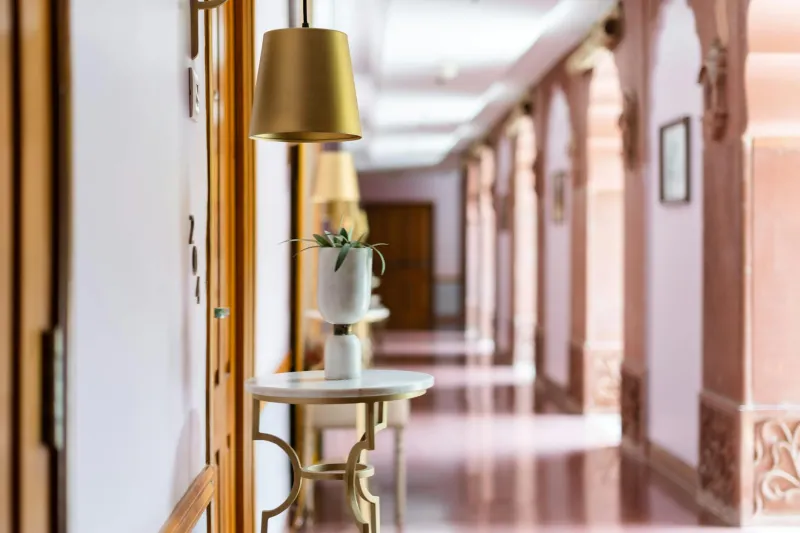
The Hospitality Canvas Revolution
Across Britain's independent hotel sector, a quiet transformation is occurring. What were once overlooked transitional spaces—corridors, stairwells, and landing areas—are becoming sophisticated galleries that generate substantial revenue for contemporary British artists whilst enhancing the commercial appeal of boutique properties.
The Pig Hotel group, with properties scattered across the English countryside, exemplifies this trend. Their commitment to showcasing local artists has resulted in over £2.3 million in direct art sales since 2018, with individual pieces ranging from £800 to £15,000. More significantly, their artist partnership programme has become a crucial stepping stone for emerging talent seeking broader market recognition.
 Photo: The Pig Hotel, via nav-cms-assets.nav.com
Beyond Decoration: The Commercial Imperative
This movement extends far beyond traditional hospitality décor. Hotel owners are discovering that original artwork serves multiple commercial functions: enhancing property values, creating talking points that drive social media engagement, and establishing revenue-sharing partnerships that benefit both venue and artist.
Sarah Mitchell, curator for the Artist Residence hotel group, explains the financial dynamics: "We typically work on a 60-40 split favouring the artist, but our exposure often leads to commission work that far exceeds the original piece value. We've had artists report six-figure earnings following initial hotel placements."
The model proves particularly effective for mid-career British artists seeking to bridge the gap between emerging status and gallery representation. Unlike traditional gallery walls, hotel spaces offer continuous exposure to an international audience of potential collectors, many of whom approach art purchasing with less intimidation than they might experience in formal gallery settings.
The Guest Experience Economy
Travelling collectors are increasingly factoring art discovery into their accommodation choices. The Zetter Townhouse in Marylebone reports that 34% of returning guests specifically reference their art collection in booking communications. This trend has prompted hotels to develop sophisticated acquisition strategies, often working with local galleries to ensure their collections remain current and commercially viable.
 Photo: The Zetter Townhouse, via resizer.mail.ru
The psychological impact proves crucial. Guests encountering artwork in relaxed, residential settings often form emotional connections that traditional gallery visits cannot replicate. The combination of holiday mindset and domestic context creates what industry specialists term "acquisition readiness"—a state where purchasing decisions feel natural rather than pressured.
Regional Impact and Artist Development
For British artists outside London's established circuit, hotel partnerships provide essential market access. The Scarlet Hotel in Cornwall has become a launching pad for southwestern artists, with their corridor exhibitions leading to gallery representation for over 40% of featured artists within two years of display.
This regional dynamic proves particularly valuable for landscape and seascape artists, whose work complements the experiential aspects of destination hotels. The authenticity of place-based artwork resonates strongly with guests seeking genuine connections to their travel destinations.
Investment Considerations and Market Dynamics
The hotel art market operates on different principles than traditional galleries. Pieces must withstand higher handling, benefit from good lighting throughout varying times of day, and appeal to diverse international tastes. These constraints have pushed British artists toward more robust materials and universal themes whilst maintaining distinctly British sensibilities.
Price points typically range from £500 to £8,000, making hotel-sourced purchases accessible to a broader collector base than gallery-priced equivalents. The informal setting often encourages first-time art purchases, with hotels reporting that 67% of art sales go to buyers making their inaugural original artwork acquisition.
The Curation Challenge
Successful hotel art programmes require sophisticated curation that balances commercial viability with aesthetic coherence. The most effective programmes rotate exhibitions quarterly, ensuring return guests encounter fresh work whilst giving artists defined sales windows.
Tim Anderson, whose landscapes have sold consistently through Lake District hotel partnerships, notes the importance of this rotation: "The urgency factor is crucial. Guests know the piece they're considering won't be there next visit, which accelerates decision-making in ways traditional galleries struggle to achieve."
Future Market Implications
As this sector matures, we're witnessing the emergence of specialist consultancies that manage hotel-artist partnerships, handling everything from insurance to installation. This professionalisation suggests the model's transition from experimental to established, with implications for how British artists approach career development beyond traditional gallery representation.
The success of hotel-based art sales is reshaping collector behaviour, with many buyers now actively seeking accommodation based on artistic offerings. This trend positions Britain's independent hotel sector as an increasingly important component of the contemporary art ecosystem, offering artists commercial opportunities whilst providing collectors with distinctive acquisition experiences that traditional venues cannot match.