Sixpence and Serendipity: How Britain's Charity Shops Are Cultivating the Next Generation of Art Collectors
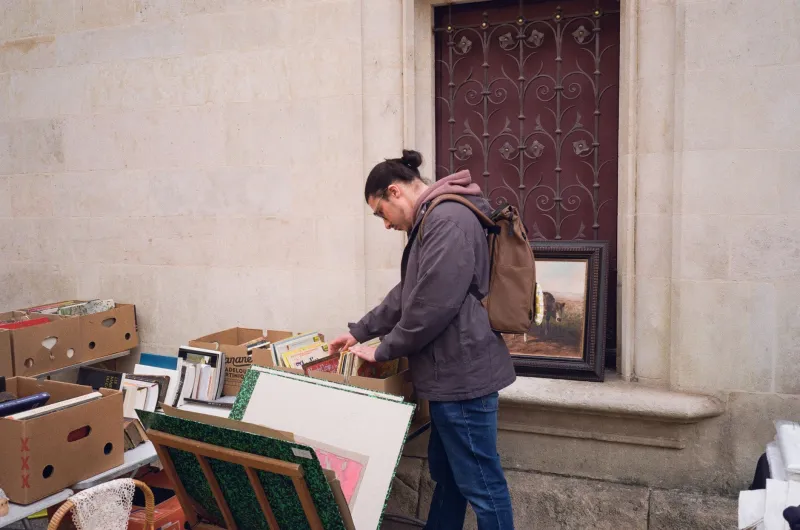
On a Tuesday morning in Shrewsbury, a retired teacher named Margaret pays £4.50 for a small oil painting of the Welsh borders. The canvas, unsigned and slightly dusty, bears the hallmarks of genuine craft — confident brushwork, a considered palette, a sense of atmosphere that no reproduction could replicate. By Friday, she has had it cleaned, identified the artist through a local auction house, and discovered she owns a minor but authenticated work by a mid-century landscape painter with a modest but growing following.
Margaret's story is neither unique nor exceptional. It is, increasingly, typical.
The High Street as Hunting Ground
Britain's charity shops — numbering in excess of 11,000 across the country — have long been associated with the kind of cultural archaeology that yields a first-edition paperback or a piece of forgotten Clarice Cliff. Original artworks, however, have traditionally been viewed as peripheral to the experience: a framed watercolour propped against the wall, priced at a few pounds because no one quite knows what to do with it.
That perception is shifting. Collectors, gallery owners, and art advisers increasingly acknowledge that the charity shop circuit represents one of the most democratically accessible entry points into original art that the UK currently offers. The financial barrier is negligible. The emotional investment, however, can be transformative.
"There is something about the physical encounter with an original work that no online marketplace can replicate," observes one gallery director based in Bristol who asked not to be named. "When someone picks up a painting in a charity shop, holds it, feels the texture of the paint, they are already having an aesthetic experience. That moment of recognition — of genuine emotional response — is precisely what distinguishes a collector from a casual buyer."
From Oxfam to Original Commission: The Collector's Journey
The trajectory from charity shop discovery to serious contemporary collecting is well-documented among dealers and advisers who work with newer buyers. The pattern tends to follow a recognisable arc: an initial purchase made on impulse or curiosity, followed by a period of research and growing confidence, and eventually a willingness to invest meaningfully in living artists whose work speaks to the same instincts first awakened by a chance find.
David, a software developer from Leeds, traces his entire collection — now comprising fourteen works, including three significant commissions from emerging northern painters — to a framed linocut he purchased for £3 in a Cancer Research shop in Headingley. "I had no idea what I was looking at," he admits. "But I knew I wanted it. That feeling of needing to own something, of not being able to leave without it — I had never experienced that before. Once I understood what that feeling meant, I started looking for it everywhere."
This emotional literacy, developed through the low-stakes environment of charity shop browsing, is precisely what gallery professionals value in collectors who arrive through this route. They are, as one Manchester-based art adviser puts it, "already trained in looking. They have learned to trust their own responses rather than waiting for institutional validation."
The Regional Dimension
The geographical spread of charity shop art discovery reflects broader patterns in British collecting culture. While London remains the dominant market for contemporary art, some of the most interesting collecting activity is happening in provincial towns and cities where charity shops are plentiful, competition among hunters is modest, and the works on offer often reflect genuinely local artistic traditions.
In Cornwall, pieces by artists associated with the St Ives tradition surface with sufficient regularity to have created a small but devoted community of dedicated searchers. In Yorkshire, works connected to the Bradford and Leeds art schools of the mid-twentieth century appear in shops with a frequency that reflects the region's deep artistic heritage. In Scotland, particularly in Edinburgh and Glasgow, the charity shop circuit has yielded works by artists whose reputations are currently undergoing reassessment.
"The regional charity shop is a kind of unintentional archive," suggests one art historian based at a northern university. "It holds what the market has not yet caught up with. For a collector with knowledge and patience, that gap between overlooked and recognised represents genuine opportunity."
The Ethics and Aesthetics of the Find
Not every charity shop discovery is a sleeping masterpiece, and experienced hunters are candid about the ratio of mundane to meaningful. Decorative prints, amateur watercolours, and reproduction oils vastly outnumber works of lasting interest. Yet seasoned collectors argue that the process of sorting, assessing, and occasionally being wrong is itself an education of considerable value.
There are, of course, ethical considerations that the more thoughtful participants in this world take seriously. When a significant work is purchased for a nominal sum from a charity that had no means of identifying its value, questions arise about the appropriate response. Some collectors donate a percentage of any subsequent sale proceeds. Others choose to gift works of genuine significance to regional galleries or museum collections where they can be properly contextualised.
A Gateway That Leads Somewhere Real
For Britain's contemporary artists and the galleries that represent them, the charity shop phenomenon is not a threat but a pipeline. The collector who begins by spending £5 on an unsigned watercolour is, with time and encouragement, the same person who will spend £500 on a print by a living artist, and eventually £5,000 on an original commission.
Gallery Top regularly encounters collectors whose first artwork cost less than a cup of coffee and whose current collection represents a meaningful investment in living British talent. The charity shop did not diminish their engagement with art — it inaugurated it.
In a cultural landscape where the barriers to collecting can feel prohibitively high, the humble high street thrift store is quietly doing some of the most important work in British art: convincing people who never thought of themselves as collectors that they already are.