From Forge to Gallery: British Metalworkers Command Fine Art Prices
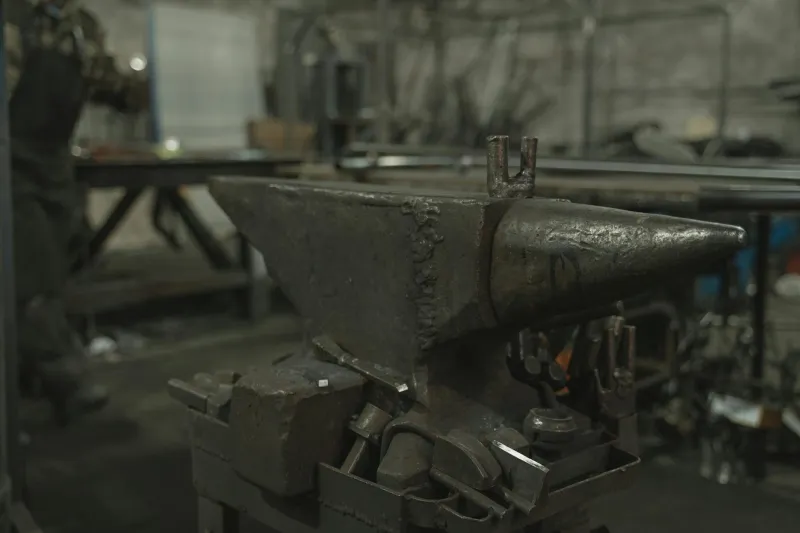
The Anvil Awakening
In workshops across Britain, the rhythmic percussion of hammer on steel signals more than traditional craft production. A new generation of metalworkers is reshaping perceptions of their medium, transforming molten iron and copper into gallery-worthy sculptures that command prices previously reserved for paint and canvas.
The shift represents a fundamental recalibration of British art collecting priorities. Where metalwork once occupied the margins of the contemporary art market, dismissed as mere craftsmanship, today's practitioners are securing five-figure sales and museum acquisitions that place their work squarely within fine art discourse.
Beyond the Workshop Stereotype
Consider the trajectory of Birmingham-based artist Sarah Chen, whose oxidised steel installations now feature in prominent London galleries. Her journey from apprentice blacksmith to represented artist illustrates the broader transformation occurring within British metalworking circles.
 Photo: Sarah Chen, via i.discogs.com
"The traditional workshop environment taught me material intimacy," Chen explains. "But contemporary collectors respond to conceptual rigour combined with technical mastery. The medium itself becomes secondary to the artistic statement."
Chen's recent series exploring industrial heritage through abstract metal forms sold entirely before her solo exhibition opened, with pieces ranging from £8,000 to £25,000. The buyers included established collectors previously focused on painting and photography.
Technical Innovation Meets Artistic Vision
The contemporary British metalwork scene benefits from technological advances that expand creative possibilities beyond traditional forging techniques. Computer-controlled plasma cutting, precision welding equipment, and innovative patination processes enable artists to achieve effects impossible through historical methods alone.
Nottingham artist Marcus Webb exemplifies this hybrid approach. His monumental copper sculptures incorporate laser-cut elements alongside hand-forged components, creating pieces that reference both digital precision and artisanal tradition. Webb's work recently entered the collection of a major British museum, validating metalwork's position within institutional collecting frameworks.
"Museums are recognising that material boundaries between fine art and craft have become increasingly arbitrary," notes Dr. Eleanor Hartwell, curator of contemporary British art at the Victoria and Albert Museum. "The quality of artistic thinking matters more than medium hierarchies established decades ago."
 Photo: Victoria and Albert Museum, via thumbs.dreamstime.com
The Collector's Perspective
Private collectors driving this market shift cite several factors influencing their purchasing decisions. Physical presence ranks prominently—metalwork sculptures command spatial attention in ways that two-dimensional pieces cannot match.
London collector James Morrison, whose contemporary British art collection spans multiple mediums, describes his recent metalwork acquisitions: "These pieces transform rooms entirely. The interplay between light and oxidised surfaces creates constantly shifting visual experiences that paintings simply cannot provide."
Practical considerations also influence collecting decisions. Metal sculptures demonstrate remarkable durability compared to works on paper or canvas, appealing to collectors concerned about long-term preservation. The medium's archival stability makes it particularly attractive for estate planning purposes.
Regional Workshop Renaissance
Britain's metalwork revival extends beyond individual artists to encompass entire regional scenes. The Sheffield area, with its deep steel-making heritage, now hosts numerous contemporary metal artists who draw inspiration from industrial history while creating decidedly modern works.
Similarly, the Ironbridge Gorge region has evolved from heritage tourism destination to active contemporary metalworking hub. Artists relocate there specifically to access traditional facilities while developing innovative practices that honour historical techniques without merely replicating them.
 Photo: Ironbridge Gorge, via c8.alamy.com
These regional concentrations create supportive networks that benefit emerging practitioners. Established artists provide mentorship while sharing specialised equipment costs, enabling younger metalworkers to develop ambitious projects without prohibitive initial investments.
Market Dynamics and Future Prospects
The British metalwork market demonstrates encouraging growth trajectories across multiple price points. Entry-level pieces from emerging artists begin around £2,000, while established practitioners command £15,000-£50,000 for significant works. This pricing structure makes metalwork accessible to collectors building initial contemporary art holdings while offering substantial appreciation potential.
Gallery representation has expanded accordingly. Specialist galleries now focus exclusively on contemporary metalwork, while mainstream contemporary art venues increasingly include metal artists in group exhibitions. This institutional support provides crucial market validation that encourages collector confidence.
The medium's environmental credentials also resonate with contemporary collecting sensibilities. Many metalworkers emphasise sustainable practices, using recycled materials and highlighting the medium's longevity compared to less durable alternatives.
Investment Considerations
For collectors evaluating metalwork acquisitions, several factors merit consideration. Artist training backgrounds vary significantly—some possess traditional apprenticeships while others approach metalwork through fine art education. Both pathways produce compelling work, though market reception may differ.
Production capacity represents another crucial variable. Unlike printmaking or photography, large-scale metalwork requires substantial time investments and specialised facilities. This natural limitation on output can support price appreciation over time.
Storage and display requirements demand practical planning. Metal sculptures often require specific environmental conditions and structural support that influence acquisition decisions for space-conscious collectors.
Cultural Recognition and Critical Reception
Art criticism increasingly acknowledges metalwork's sophisticated conceptual frameworks rather than focusing solely on technical execution. Major art publications now feature metalwork alongside other contemporary mediums, signalling broader cultural acceptance.
This critical attention validates collecting decisions while building market awareness among previously uninformed buyers. As metalwork gains visibility through media coverage and institutional exhibitions, demand continues expanding beyond traditional craft enthusiasts to encompass mainstream contemporary art collectors.
The transformation of British metalwork from workshop craft to gallery commodity reflects broader shifts in contemporary art discourse. As medium hierarchies dissolve and collectors prioritise artistic quality over traditional categories, metalworkers find themselves positioned at the forefront of an exciting market evolution that shows no signs of slowing.