From Craft Room to Auction House
When Grayson Perry's tapestries began selling for six-figure sums, many dismissed it as celebrity artist anomaly. Today, as contemporary British textile works regularly achieve £15,000-50,000 at auction, it's clear that a fundamental market shift is underway. Collectors who once relegated textile art to 'decorative' status are recognising the medium's capacity for serious artistic discourse and long-term value appreciation.
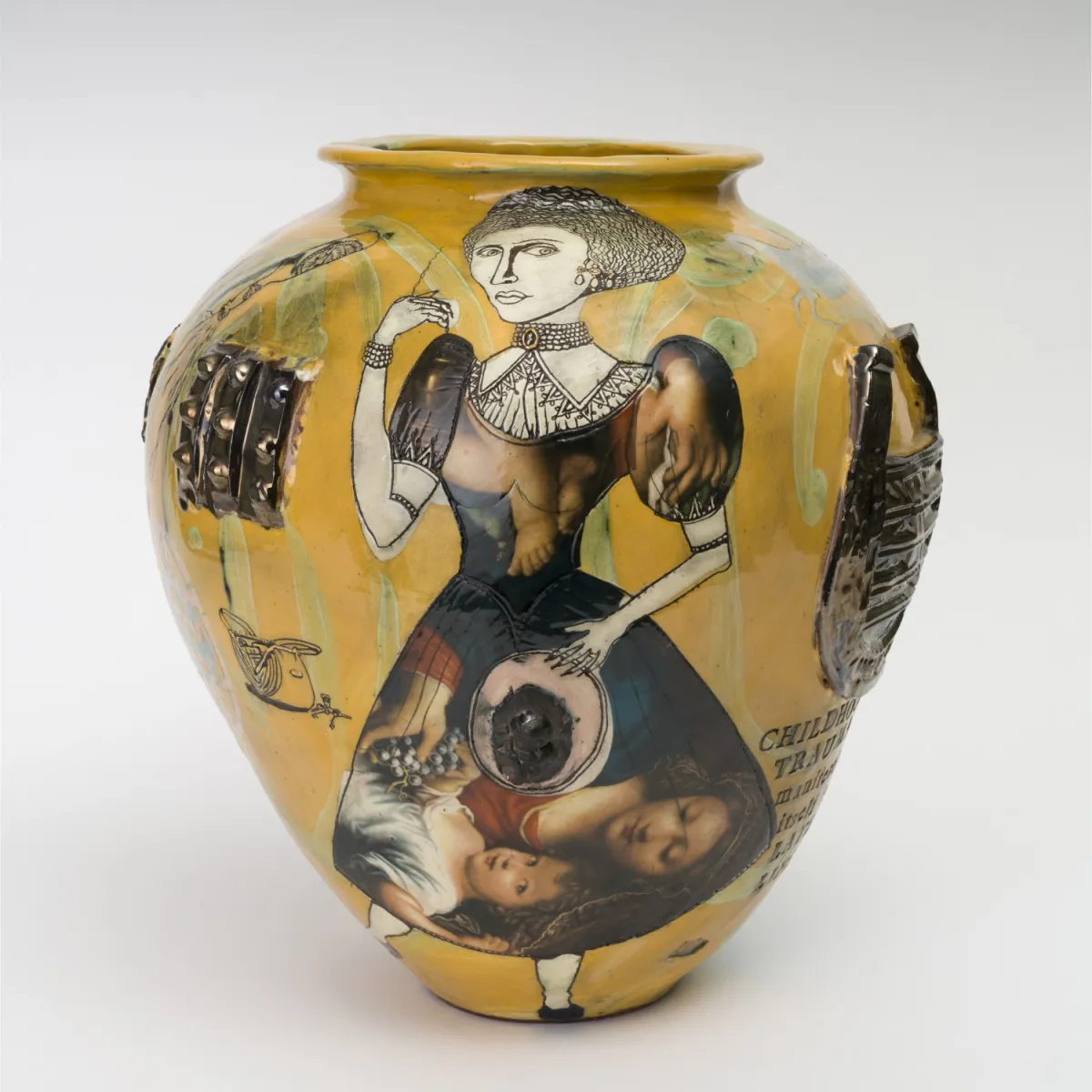 Photo: Grayson Perry, via www.nationalgalleries.org
The transformation is particularly evident at London's specialist textile auctions, where bidding wars now erupt over pieces by artists like Freddie Robins and Celia Pym. Last month, a hand-embroidered installation by Manchester-based artist Joanne Tatham achieved £28,000 at Phillips – nearly triple its estimate. Such results reflect growing institutional recognition and, crucially, sustained collector confidence in the medium's investment potential.
Technical Mastery Meets Contemporary Urgency
Today's leading British textile artists combine centuries-old techniques with urgent contemporary themes, creating works that resonate powerfully with current social and political discourse. Rebecca Salter RA's silk installations explore environmental degradation through traditional Japanese dyeing methods, whilst Glasgow's Christine Borland uses medical textiles to examine mortality and healing.
This synthesis of historical craft knowledge with contemporary conceptual frameworks has proven particularly compelling to collectors. Art advisor Miranda Phillips, who specialises in contemporary British work, explains: "These artists aren't simply reviving traditional techniques – they're using them to articulate distinctly modern anxieties. The result is work that feels both timeless and urgently relevant."
The Digital Documentation Revolution
Social media platforms have transformed how textile art reaches potential collectors. Instagram's visual format particularly suits textile work, allowing artists to document both finished pieces and intricate creation processes. Louise Bourgeois's textile works gaining posthumous acclaim has created additional market confidence, whilst younger artists like Raquel Fornasaro have built substantial followings through carefully curated online presence.
London dealer Sarah Myerscough notes that digital platforms have democratised textile art appreciation: "Collectors who might never have encountered this work in traditional gallery settings are discovering it online and developing serious collecting interests. We're seeing international demand for British textile artists that simply didn't exist five years ago."
Investment Fundamentals
Several factors contribute to textile art's improving investment credentials. Rarity plays a crucial role – the time-intensive nature of textile creation means artists produce relatively few works annually, creating natural scarcity. Additionally, the medium's historical association with women's work has meant systematic undervaluation, presenting opportunities for prescient collectors.
Authenticity verification, once problematic for textile works, has improved significantly. The Textile Research Centre at the University of Leeds now offers scientific authentication services, whilst digital documentation standards have become increasingly sophisticated. These developments provide collectors with greater confidence in provenance and condition assessment.
Regional Scenes and Emerging Talent
Britain's textile art renaissance extends well beyond London, with distinct regional scenes developing their own characteristics. Scotland's textile artists often incorporate traditional Highland techniques, whilst Cornwall's coastal artists integrate marine themes and materials. The Midlands, with its industrial textile heritage, has produced artists who interrogate labour history through contemporary fibre work.
Birmingham's Eastside Projects recently showcased fifteen emerging British textile artists, with several pieces acquired by major collectors before the exhibition's conclusion. Curator Sarah Perks observed unprecedented interest: "We had collectors travelling from across Europe specifically to view textile works. That level of dedicated attention represents a genuine market shift."
Institutional Recognition and Academic Validation
Major museums are increasingly acquiring contemporary British textile art, lending institutional weight to the medium's artistic credibility. Tate Modern's recent acquisition of works by Khadija Saye and Alberta Whittle signals high-level curatorial confidence, whilst the V&A's expanded contemporary textile programme has elevated public awareness significantly.
 Photo: Tate Modern, via thumbs.dreamstime.com
Academic programmes at institutions like the Royal College of Art and Goldsmiths have produced graduates whose work immediately enters serious collector consideration. This educational infrastructure ensures continued innovation whilst maintaining technical standards that satisfy discriminating buyers.
Market Mechanisms and Price Discovery
Specialist galleries focusing on contemporary textile art have emerged across Britain, creating more sophisticated market mechanisms. Galerie Mirchandani + Steinruecke in London and Glasgow's Wasps Studios both report strong sales growth, with works by established artists appreciating 20-30% annually over the past three years.
Online platforms have also facilitated price discovery. Artsy and Saatchi Art report significant increases in textile art sales, with British artists particularly well-represented. The transparency of online pricing has helped establish market rates whilst reaching international collector bases.
Conservation and Longevity Considerations
Historically, concerns about textile art's longevity have deterred some collectors. Modern conservation techniques and archival materials have largely addressed these issues. Leading artists now work closely with conservation specialists, ensuring their pieces meet museum-standard durability requirements.
The Textile Conservation Centre provides guidance on proper care and display, whilst insurance companies have developed specific policies for contemporary textile art. These practical developments remove barriers that previously limited collector confidence.
Future Trajectories
As climate change concerns intensify, textile artists addressing environmental themes through sustainable practices are gaining particular attention. Artists like Zoe Akester, who creates large-scale installations from recycled materials, represent a growing movement that aligns with contemporary collector values.
The integration of technology with traditional techniques also presents opportunities. Artists incorporating LED elements, responsive fibres, and digital printing are creating hybrid works that appeal to collectors interested in innovation whilst maintaining connections to craft traditions.
Investment Strategy Considerations
For collectors entering the textile art market, several strategies merit consideration. Emerging artists with strong educational backgrounds and early institutional recognition often represent good value, particularly those addressing contemporary social issues through their work. Regional scenes outside London may offer opportunities before broader market recognition develops.
Established artists with consistent auction results provide more predictable appreciation, whilst pieces with strong provenance or exhibition history command premiums but offer greater security. As with any art investment, personal engagement with the work remains paramount, but the textile medium's improving market fundamentals suggest that aesthetic appreciation and financial appreciation need not be mutually exclusive.
The transformation of British textile art from craft curiosity to serious collecting category reflects broader changes in how we value artistic labour and cultural expression. As traditional hierarchies continue dissolving, collectors who recognise textile art's unique combination of technical mastery, conceptual depth, and market potential may well find themselves ahead of a significant cultural and financial curve.