Platform Galleries: How Britain's Railway Stations Are Becoming Unlikely Hubs of Art Discovery
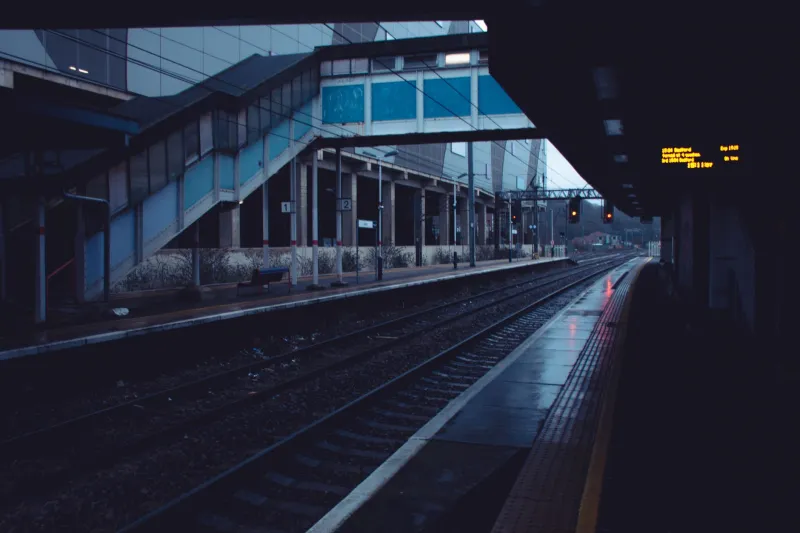
For most of Britain's nine million daily rail commuters, the journey between home and work is defined by familiar rituals: the tapping of phones, the rustling of newspapers, the resigned inspection of departure boards. Yet a quiet transformation is under way across the country's stations and transport corridors—one that is turning the overlooked margins of the morning commute into genuine moments of artistic encounter.
Contemporary British artists, working in partnership with regional rail operators and transport authorities, are installing their work in spaces that guarantee footfall no gallery could replicate. The results are beginning to reverberate through the art market in ways that few anticipated.
The Architecture of Attention
There is something particular about the psychological state of a commuter waiting on a platform. Freed momentarily from the demands of both work and home, yet not quite at leisure, the traveller occupies a curious liminal space—alert, observant, and, crucially, receptive. Arts organisations and transport bodies have begun to recognise this condition as an opportunity rather than an afterthought.
Transport for London's long-running Art on the Underground programme, which places commissioned works across the Tube network, has demonstrated the model's viability for decades. But it is the expansion of similar initiatives into regional rail—across Northern Trains, Avanti West Coast, and Great Western Railway's heritage-rich corridor—that represents the more recent and commercially interesting development. Artists who once competed for wall space in metropolitan galleries are now reaching audiences in Huddersfield, Chippenham, and Carlisle, cities where the gallery infrastructure is thinner but the appetite, it turns out, is not.
Pop-Up Installations and the Impulse of the Platform
The pop-up model has proved particularly effective in transport settings. Unlike a fixed gallery visit—planned, deliberate, occasionally intimidating—an encounter with art on a platform or in a waiting room carries none of those social pressures. The work simply presents itself, and the commuter is free to look or not look, to engage or to pass on.
Several regional initiatives have taken this logic further, introducing small-format, affordably priced originals and limited-edition prints into station settings alongside QR codes linking directly to artist profiles and purchasing options. The friction between discovery and acquisition is deliberately minimised. A painting encountered at 7:43 on a Tuesday morning can be purchased before the train departs.
Artists working in this space report that the transaction often feels different from a conventional gallery sale. Buyers describe a sense of having been found by the work rather than having sought it out—a dynamic that, paradoxically, appears to strengthen their attachment to the piece. Several artists represented through Gallery Top have noted that commuter-acquired works are among those their clients speak about most warmly, precisely because the discovery was unplanned.
Heritage Lines and the Romanticism of Rail
Beyond the functional commuter routes, Britain's preserved and heritage railways offer a distinct strand of artistic opportunity. Lines such as the Settle–Carlisle, the West Somerset Railway, and the Ffestiniog in Wales draw visitors who are already disposed towards a contemplative, historically attuned experience. The aesthetic of steam-era travel—the burnished wood of waiting rooms, the enamel signage, the particular quality of light through Victorian glazing—provides a sympathetic context for work that engages with landscape, memory, and the pastoral tradition.
A number of painters working in the plein air and landscape idiom have begun to exhibit specifically within heritage railway contexts, finding that the setting amplifies the resonance of their subject matter. Collectors who might hesitate to enter a white-cube gallery find themselves drawn into conversation with art in an environment that feels both welcoming and culturally familiar.
A Demographic the Market Has Overlooked
The commuter as collector is a figure the mainstream art market has been slow to court. Regular rail travellers skew towards professional employment, disposable income, and—critically—a habitual engagement with the environments through which they pass. They notice things. They return to the same spaces day after day, allowing work to accumulate meaning through repeated viewing in a way that a single gallery visit rarely permits.
This repeated exposure is commercially significant. Research into purchasing behaviour consistently finds that familiarity breeds confidence. A commuter who has studied a particular painting across a fortnight of morning journeys arrives at the decision to buy from a position of genuine connection, not impulsive novelty. The conversion rate from sustained platform exposure to actual purchase, while still being quantified by those running these programmes, appears meaningfully higher than equivalent figures from conventional open exhibitions.
What Artists and Operators Are Learning
The most successful partnerships between artists and rail operators share certain characteristics. Scale matters: works that read clearly from a distance, in variable lighting conditions and amidst the ambient noise of a busy station, tend to generate more sustained engagement than those requiring close, quiet contemplation. Subject matter that speaks to place—local topography, urban character, the textures of a particular region—creates an immediate point of connection for commuters who travel through that landscape daily.
Logistical considerations are not trivial. The installation, security, and insurance of original works in public transport settings demands careful planning, and artists entering these partnerships for the first time frequently cite the administrative complexity as their primary challenge. Organisations that can offer curatorial support and practical guidance in navigating these requirements are increasingly valued by the artists who work with them.
The Journey Continues
The convergence of art and rail travel in Britain is, in one sense, a return to an older tradition. The great Victorian termini were designed as civic monuments, their scale and ornament intended to inspire as much as to function. Restoring an artistic dimension to these spaces—and extending that ambition to the humbler platforms and waiting rooms of the regional network—feels less like innovation than recovery.
For contemporary British artists seeking new audiences, and for collectors who have not yet found their way into a gallery, the daily commute may prove to be the most productive journey they make.