The Dawn Chorus of Creativity
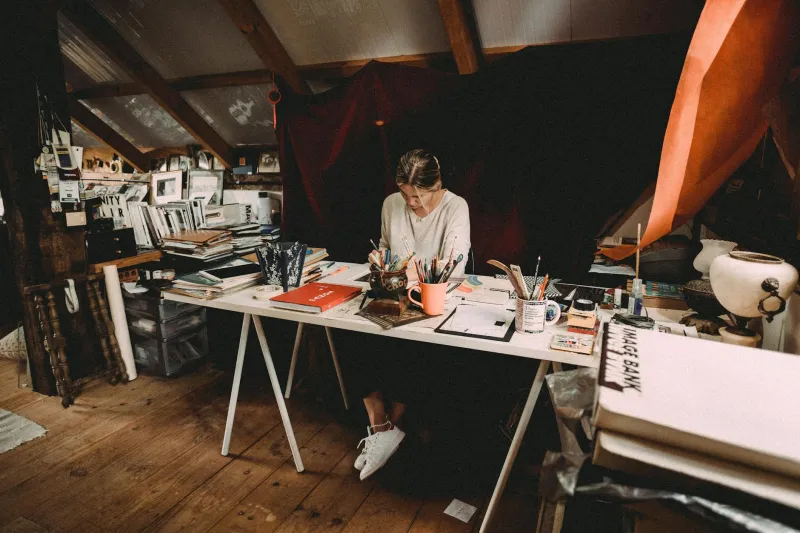
At 5:30 AM, while most of Britain sleeps, Sarah Chen stands in her converted garage studio in Birmingham, brush poised over canvas. By 7 AM, she'll be preparing breakfast for her twins and organising school bags, but these precious ninety minutes belong entirely to her art. It's a routine that has transformed her watercolour practice from weekend hobby to a £45,000 annual income stream.
Chen represents a growing demographic within Britain's contemporary art scene: the artist-parent who has discovered that parenthood, rather than curtailing creative ambition, can actually sharpen professional focus. Across the UK, from converted spare bedrooms in Manchester to purpose-built garden studios in Surrey, parents are proving that artistic success doesn't require the romanticised notion of endless studio hours and bohemian freedom.
Constraints as Creative Catalysts
The traditional narrative of artistic dedication—solitary figures working through the night, sacrificing personal relationships for their craft—is being quietly dismantled by Britain's parent practitioners. These artists have discovered what productivity experts have long understood: limitations can breed innovation.
"Having only two hours each morning forced me to become incredibly decisive about my work," explains Marcus Thompson, a sculptor from Edinburgh whose bronze miniatures now sell through three London galleries. "I couldn't afford to second-guess every mark or spend hours contemplating my next move. Parenthood taught me the value of purposeful action."
This focused approach extends beyond studio practice into business operations. Parent artists often develop streamlined systems for everything from social media marketing to client communications, maximising impact within compressed timeframes. The result is often more commercially viable practices than their child-free counterparts who may have the luxury of endless deliberation.
The Economics of Efficiency
Financial pressure, particularly around childcare costs, has paradoxically strengthened many parent artists' business acumen. When nursery fees in London can exceed £1,400 monthly, there's immediate clarity about the need for art to contribute meaningfully to household income.
Jenna Walsh, a textile artist from Cardiff, began selling her work seriously when maternity pay ended and childcare costs began. "I couldn't treat my art as a nice-to-have anymore," she reflects. "It had to work financially, which meant really understanding my market, pricing properly, and treating it like the business it needed to become."
This economic imperative has led many parent artists to embrace digital platforms and direct sales models that bypass traditional gallery commission structures. Instagram shops, Etsy stores, and personal websites allow for immediate income generation without the lengthy lead times of gallery representation.
Redefining Professional Space
The notion that serious artists require dedicated, separate studio spaces is being challenged by Britain's parent practitioners who've transformed domestic environments into productive creative zones. Kitchen tables become printmaking stations, utility rooms house pottery wheels, and garden sheds evolve into professional painting studios.
This domestic integration often leads to more experimental approaches to materials and scale. Working within home constraints has pushed many artists towards mixed media, smaller formats, and innovative storage solutions that have become signature elements of their artistic practice.
The Network Effect
Parenthood naturally creates communities, and artist-parents have leveraged these social connections into professional opportunities. School gates become informal exhibition spaces, playgroup conversations reveal potential collectors, and family networks provide word-of-mouth marketing that money cannot buy.
"My biggest commission came through another parent at my daughter's nursery," shares David Kumar, whose architectural drawings now feature in several prominent London developments. "These organic connections often lead to more meaningful, long-term client relationships than traditional gallery introductions."
Digital Advantage
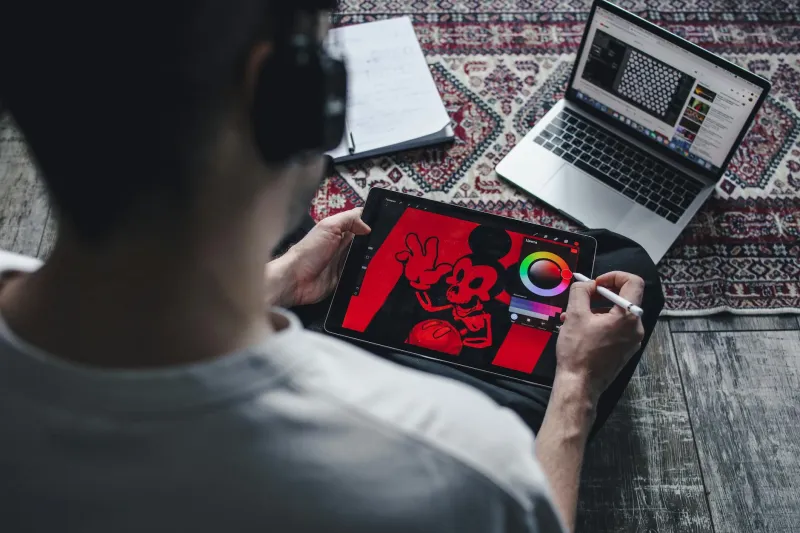
Parent artists have been early adopters of digital tools that allow creative work to continue around family schedules. Design software, online galleries, and virtual studio visits enable professional practice that adapts to school holidays, sick days, and unpredictable family demands.
Many have found that digital platforms particularly suit their time-compressed schedules, allowing for customer engagement during brief windows when children are occupied, and enabling sales processes that don't require physical gallery presence.
The Long View
Perhaps most significantly, parent artists often develop a more sustainable approach to career development. Without the pressure to achieve immediate breakthrough success, they build practices gradually, creating steady income streams that support long-term artistic development.
This patient approach often results in more authentic artistic voices, as parent practitioners tend to focus on subjects and techniques that genuinely engage them rather than chasing market trends or critical approval.
Changing the Conversation
As Britain's creative economy continues to evolve, the success of artist-parents challenges fundamental assumptions about what constitutes serious artistic practice. Their achievements suggest that creativity thrives within structure, that commercial success and artistic integrity can coexist, and that family life enriches rather than diminishes creative output.
For emerging British artists considering parenthood, these practitioners offer proof that artistic ambition and family responsibilities aren't mutually exclusive—they're potentially complementary forces that can drive both creative innovation and commercial success.