The Personal Connection Renaissance
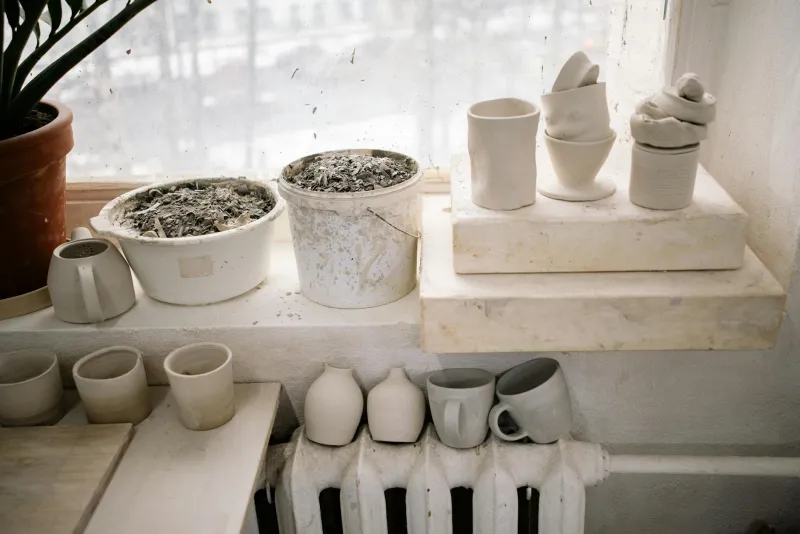
In a converted Victorian warehouse in Manchester's Northern Quarter, ceramicist Sarah Pemberton watches as a potential collector carefully examines her latest sculptural piece. The buyer, a London-based art advisor, has travelled nearly 200 miles not to view work in a pristine white cube, but to experience it within the creative chaos of Pemberton's working studio. This scene, increasingly common across Britain's artistic landscape, represents a fundamental shift in how contemporary art changes hands.
The traditional gallery model, with its polished presentation and institutional gravitas, is facing an unexpected challenger: the authentic, unmediated studio visit. From converted barns in the Cotswolds to purpose-built spaces in Glasgow's creative quarters, artists' studios are emerging as the most dynamic retail environments in British art.
"There's something profoundly different about seeing work where it's made," explains Dr. Miranda Hawthorn, a contemporary art specialist at Sotheby's Institute. "Collectors aren't just buying the finished piece; they're investing in the entire creative narrative."
The Economics of Direct Engagement
The financial mathematics of studio visits present compelling arguments for both parties. Gallery commissions, typically ranging from 40% to 60%, represent a substantial margin that direct sales eliminate entirely. For emerging artists struggling to establish sustainable practices, this difference can mean the distinction between financial survival and creative compromise.
Take Newcastle-based painter James Thornfield, whose abstract landscapes have found devoted followers through studio visits alone. "When galleries take their cut, I need to price work at levels that often exclude the very people I want to connect with," he explains. "Direct sales allow me to offer fair prices whilst maintaining a living wage."
Collectors, meanwhile, often perceive direct purchases as offering superior value. The absence of gallery overhead translates to lower prices for comparable quality work, whilst the personal connection with the artist adds intangible value that many find irresistible.
The Provenance of Place
Studio visits offer something galleries cannot: complete provenance transparency. Collectors witness not merely the finished work, but the environment, tools, and processes that created it. This comprehensive understanding of artistic practice adds layers of meaning that enhance long-term appreciation and, potentially, investment value.
In Cornwall, sculptor David Marsden has converted his clifftop studio into what he describes as "part workshop, part gallery, part theatrical experience." Visitors observe works in progress, understand technical challenges, and leave with detailed documentation of their piece's creation journey.
"The story becomes part of the artwork," notes collector Elizabeth Fairfax, whose Birmingham home houses pieces acquired exclusively through studio visits. "When friends admire a painting, I don't just describe its aesthetic qualities—I share the entire acquisition narrative."
Regional Renaissance
This direct engagement model particularly benefits artists working outside London's established art ecosystem. Studios in Leeds, Cardiff, and Edinburgh are attracting collectors who might never have encountered these artists through traditional gallery representation.
The phenomenon has created unexpected art tourism, with collectors planning weekend trips around studio visits. The Lake District, already renowned for its creative heritage, now hosts informal networks of artists opening their spaces to serious buyers.
"We're seeing collectors treat studio visits like wine tours," observes art consultant Patricia Henley. "They're planning entire weekends around discovering new artists in specific regions."
The Intimacy Factor
Beyond economics, studio visits satisfy collectors' desire for authentic connection in an increasingly digital world. The opportunity to discuss technique, inspiration, and creative philosophy directly with artists creates relationships that gallery transactions rarely achieve.
Photographer Anna Blackwood, working from a converted church in rural Northumberland, describes her collector relationships as "collaborative rather than transactional." Several buyers have commissioned specific works after understanding her practice through studio visits, creating ongoing creative partnerships.
Challenges and Considerations
This direct model isn't without complications. Artists must balance creative work with sales responsibilities, often lacking the marketing expertise that galleries provide. Insurance, security, and professional presentation require careful consideration when opening private spaces to strangers.
Some collectors worry about purchasing decisions made in emotionally charged environments. The romantic appeal of buying art from its birthplace can override objective quality assessment, potentially leading to regrettable acquisitions.
The Future Landscape
As this trend matures, hybrid models are emerging. Some artists maintain gallery relationships whilst offering studio visits to serious collectors, creating multi-tiered engagement strategies. Others are forming collaborative studio spaces that combine individual creative practice with shared retail presentation.
The rise of social media has facilitated these direct connections, with platforms like Instagram serving as virtual studio doors that collectors can peek through before requesting physical visits.
Redefining Art Commerce
The studio visit revival represents more than mere cost-cutting; it embodies a fundamental reimagining of art commerce based on personal connection, transparency, and mutual respect. As British collectors increasingly seek authentic experiences over institutional validation, artists' studios are quietly becoming the most exciting retail spaces in contemporary art.
This shift doesn't herald the death of galleries, but rather the diversification of art market channels. For collectors willing to venture beyond traditional retail spaces, Britain's studios offer unprecedented access to emerging talent and authentic creative experiences that money alone cannot buy.